1. How old is your mattress?
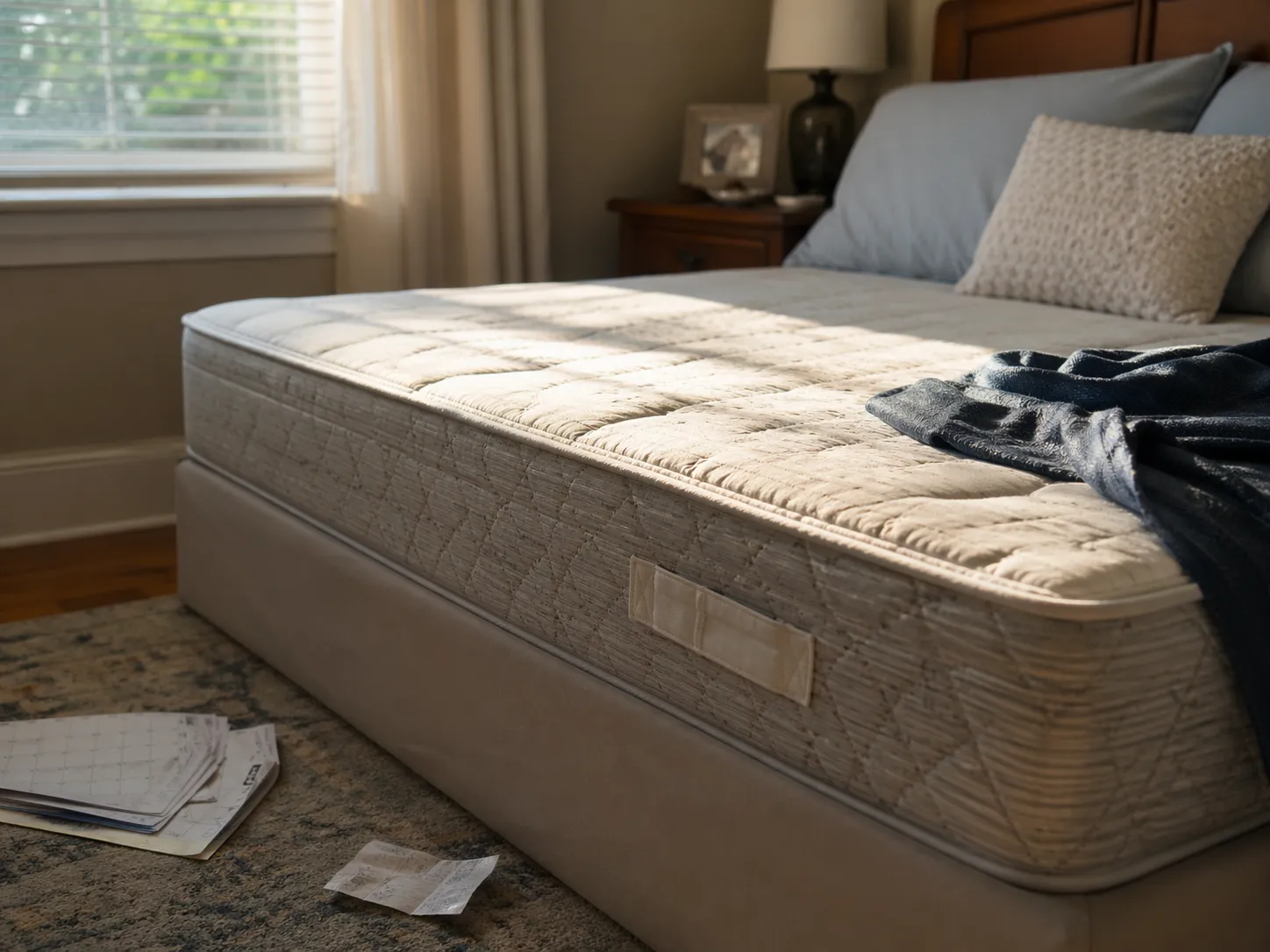
The first sign is easy: your mattress may just be too old. A lot of people cannot even remember when they bought theirs, which already says something. After about seven years, a mattress is due for replacement, and ten years is really the outer limit. Sleep guidance from the Sleep Foundation also lists a mattress being around six to eight years old or more as one of the clearest warning signs that it may be time for a new one. That does not mean every mattress suddenly becomes terrible on a certain birthday, but age matters because the materials inside do not stay the same forever. Foam becomes soft, springs lose resilience, and support becomes less reliable, even if the bed still looks fine from the outside.
Ask yourself honestly: how many years has your mattress been working every single night? If the answer is closer to a decade than a couple of years, it may already be giving you less support than you think. This is especially true if you have also noticed other small issues, like waking up stiff or feeling more comfortable in another bed. People often wait until a mattress looks terrible before replacing it, but by then, the decline has usually been going on for a long time. If your mattress is old and your sleep is not what it used to be, you may just need to replace the mattress as soon as possible. Sometimes the smartest sign to trust is simply how long you have already pushed your luck.