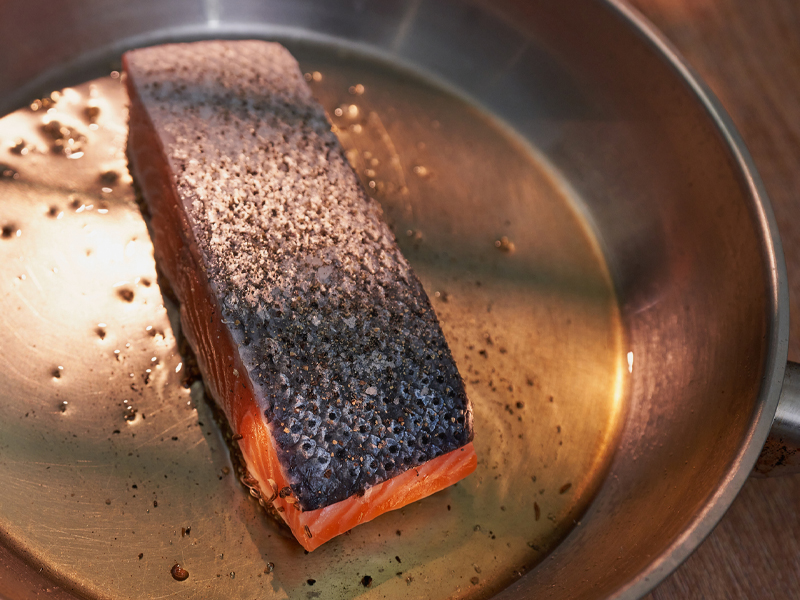
Cooking Tips For Preparing Salmon
If you’ve never had salmon skin before, the preparation method makes a significant impact. Leaving the skin on while cooking helps keep the salmon moist and can turn it into a crispy, flavorful highlight of your dish. Methods like grilling, pan-searing, or frying work wonders to create a satisfying crunch, while steaming, boiling, or smoking often leave the skin chewy and less appealing. For a fun twist, whip up some “salmon bacon” by frying thin strips of skin until they’re golden and crispy, then sprinkle on your favorite seasonings for an irresistible snack!
To prepare crispy salmon skin, begin by removing the skin from the fish and cutting it into one-inch strips. Pat the strips dry with paper towels to remove excess moisture, then heat oil in a skillet over medium-high heat. Once the oil is hot, add the strips to the pan, turning them occasionally to prevent burning. When they’re golden and crisp, drain them on a paper towel and season with salt or spices. This versatile preparation works well as a snack, a topping for salads, or a crunchy addition to main dishes.
Key Points To Remember About Salmon Skin
In summary, salmon skin can be a delicious and healthful addition to your diet, provided it comes from a high-quality source. For most people, eating salmon skin offers an easy way to increase their intake of omega-3 fatty acids and other nutrients. However, individuals concerned about contaminants or sensitive to environmental toxins should take care when selecting their fish. By choosing wild-caught salmon from clean waters and preparing it thoughtfully, you can enjoy the benefits of salmon skin while minimizing potential risks.