Try the simplest fix first
If the broken key is still near the front of the lock, your first move should be to make the cylinder less stubborn. A tiny amount of dry lock lubricant can help. PTFE-based lock lubricants are great for locks, and only a very light application is needed. Its dry formula is specifically meant to lubricate without attracting the dirt and dust that can make a lock feel gritty in the first place. In other words, this is not the moment to drown the keyway in random oily spray and hope for the best. Use a little, give it a moment, and keep your movements gentle.
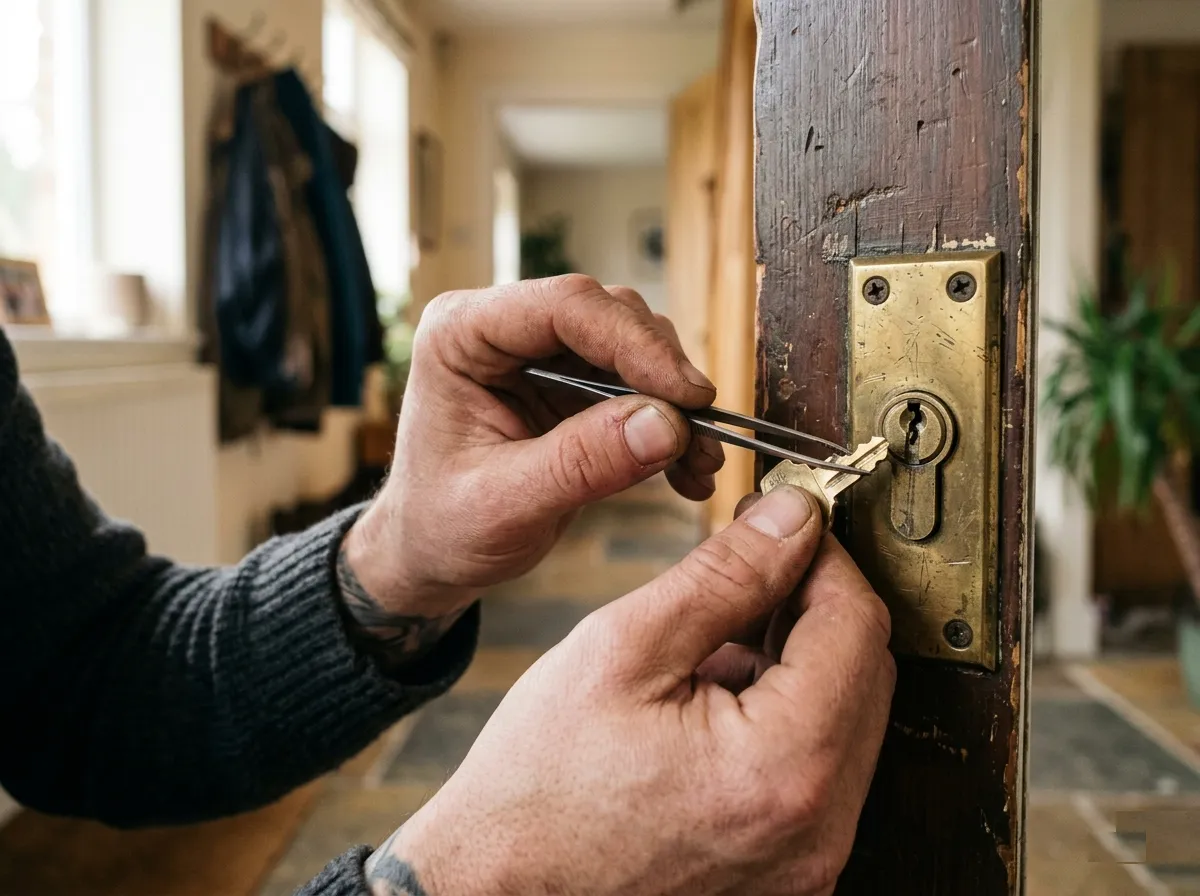
Now check whether enough metal is exposed to grab. If it is, use fine tweezers or needle-nose pliers and pull straight outward, slowly and steadily. Don’t twist the fragment like you’re trying to unlock the door with it. That can wedge it tighter. A tiny wiggle is fine, but the goal is to ease it out, not wrestle it into submission. If your tool is too bulky to get a clean grip, stop before you accidentally shove the piece deeper into the lock. This is one of those repairs where patience looks boring but saves the day.