4. Breast changes
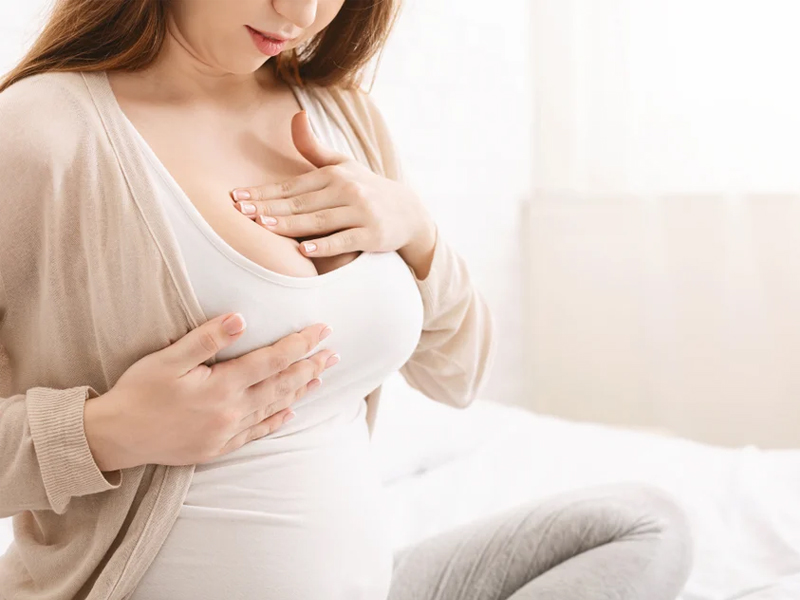
As the body prepares to supply milk to the newborn, the body undergoes several changes. The areolas often darken due to pregnancy hormones, and as they grow, tenderness and sensitivity are common. Stretch marks can also occur, especially if they increase in size rapidly. Milk ducts also expand in preparation. Tiny lumps can also occur from blocked milk ducts, but if they don’t disappear after several days of massaging and warm compresses, it’s a good idea to notify a doctor.
5. Hair and nail changes
Lots of women have nail and hair growth while pregnant, but it can also cause hair loss or hair shedding. Eating healthy foods and taking prenatal vitamins are important during pregnancy, but they can also cause brittle nails and keratosis. Losing hair post-partum is also common as hormone levels and hair follicles regulate themselves without the addition of pregnancy hormones.
6. Circulation and blood volume
Blood volume will increase, which can enlarge the appearance of veins. These changes to the circulatory system and blood pressure can cause dizziness and fainting during pregnancy. These spells can also occur due to an expanding uterus that puts pressure on blood vessels, as well as changes in appetite or metabolism. Bed rest, water and loose-fitting clothes can help minimize this.
7. Digestion
Hormones cause all kinds of food cravings, food aversions and nausea during pregnancy. The digestive system also undergoes some major changes. Constipation can occur from the added weight of a growing uterus, and heartburn is common in the third trimester as a growing baby pushes on the stomach. Tinier, frequent meals can help to reduce this, as well as antacids.