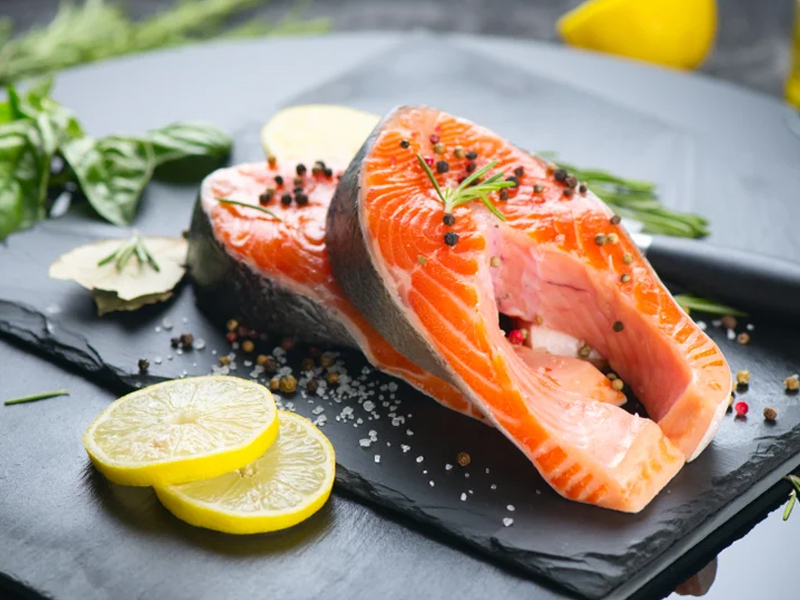
Salmon is one of the healthiest forms of protein you can consume. Whether it’s being poached in butter, steamed with greens or raw in a poke bowl, it’s also an incredibly versatile food. Still, there are lots of myths and misconceptions surrounding this pink-hued, flavorful fish. Here are all the myths you need to stop believing about salmon.
1. It tastes fishy
If you’re having this issue, cook your fish via sous vide, which is gentler than baking or grilling. When salmon is overcooked, it can take on those fishy flavors and smells that might be deterring you from eating this seafood.
2. The color dictates how healthy it will be
Some forms of salmon have color and food dyes added based on the fact that dark-colored salmon with that rich, red hue sells better. However, salmon isn’t naturally dark red all the time — even healthy varieties can be naturally gray. So for this reason, the color of your salmon doesn’t dictate the nutrition within.
3. Salmon needs to be flaky
How many people have told you that when salmon is fully cooked, it easily flakes? In reality, salmon doesn’t always cook evenly. It’s often thicker in some parts (the pectoral fins) and thinner in others (the tail) which means that even if your salmon’s tail end is cooked, the middle still may contain raw meat. Use a digital food thermometer to ensure that the thickest part of your salmon is fully cooked.