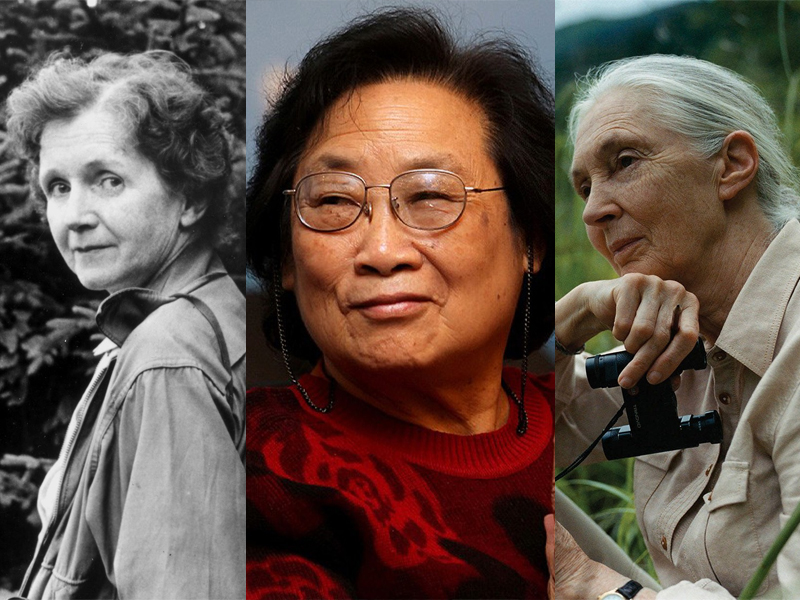
6. Rachel Carson
We have American marine biologist Rachel Carson to thank for her work “Silent Spring” which exposed the dangers of using too many synthetic pesticides. Carson was also partially responsible for the contemporary environmental movement today. When her work was released, she stood strong in the face of criticism from the chemical industry. At the same time, she was battling breast cancer. But even after Carson passed away, her famous book got the public more interested in environmental issues, along with public health, and as a result, Nixon formed the EPA, or Environmental Protection Agency, a few years after.
7. Tu Youyou
In the 1970s, this pharmaceutical chemist discovered a new malaria treatment and saved millions. With a background in herbal and traditional Chinese medicine, she discovered the use of sweet wormwood as a treatment for intermittent fevers, which commonly occur with malaria. In her research, she discovered a substance called artemisinin, which inhibits malaria. Youyou even offered to be the first human to test the substance. Today, she’s the chief scientist at the China Academy of Traditional Chinese Medicine, and won the 2015 Nobel Prize in Physiology or Medicine for her research.
8. Jane Goodall
Still working today, Jane Goodall was one of the first female scientists to get down and dirty with fieldwork. The British primatologist is the world’s top expert on chimpanzees due to her 55-year-long time studying the wild chips in Tanzania’s Gomber Stream National Park. She was the first person to discover how chimps create and use tools. Previously, research indicated that humans were the only ones to do this, but Goodall proved them wrong she watched them fishing for termites with uniquely prepped sticks.